


![[Brief] Palm Beach Symphony Announces Award Winners](https://www.themuseatdreyfoos.com/wp-content/uploads/2026/03/Screenshot-2026-03-06-at-3.05.30-PM.png)












When pop singer Dolly Parton fell ill early Oct. 25, her sister, Freida Parton, made a post on Facebook asking for prayers for her sister’s recovery, which would unintentionally lead to mass speculation regarding Dolly’s condition.
Soon after, artificial intelligence (AI) images of Dolly were spread around on the internet, depicting the celebrity lying on her deathbed. With limited information available on Dolly Parton’s condition, fans ran with it and created falsified images of her to spread a message to unaware, naive audiences who were not aware of the full context, which Freida later clarified after seeing the photos: her sister was merely “under the weather.”
This fake outrage comes down to media literacy, or the lack thereof these days, a term defined by the non-profit advocacy group Media Literacy Now as a person’s ability to “decode media messages (including the systems in which they exist); assess the influence of those messages on thoughts, feelings, and behaviors; and create media thoughtfully and conscientiously.”
In online discussions, people often say that media literacy is dying, or that there is a media literacy crisis. Many people fail to comprehend basic ideas, facts, and messages in the media. This can be traced back to isolation during the pandemic, increasing political polarization, and limits on education. However, after the rise of AI, it’s gotten significantly worse, especially for digital images. These fake images aren’t exclusive to Dolly and her worried fans. According to a study on online identity in 2024 conducted by Jumio, a private online mobile and identity intelligence company, 60% of participants had seen a deepfake on the internet at least once in the past year. A deepfake, as defined by the Merriam-Webster dictionary, is an image or recording that has been convincingly altered and manipulated to misrepresent someone as doing or saying something that was not actually done or said. It is especially worrying when deepfakes are used for young children and celebrities. It’s not impossible for these deepfakes to show up in court and be used as evidence, which is absolutely disgusting to think about.
Decoding media and having media literacy skills are necessary for all humans in order to navigate through a life surrounded by media. However, after the pandemic, increasing political polarization, and the uptick of content generated by AI, our ability to understand the media we consume has become increasingly more difficult, hence why many say we are currently in a media literacy crisis.
The Problem with Media Literacy
In our current, ever-expanding technological world, the media infiltrates all sectors of the average person’s life. Whether it’s the films we watch, the games we play, or the news we read, the media impacts our every thought and perspective. The task to recognize where the information we tend to blindly trust comes from, who created it, and the veracity of the information falls on us as consumers.
As AI continues to expand, the task of deciphering information is becoming considerably more difficult. Even I fail at recognizing videos or images that may be AI-generated, blinded by the increasingly human characteristics and detailed depictions of places, animals, and news, altered pixels present. AI has also managed to infiltrate print writing. NewsGuard, an online AI-tracking website, has identified “2,089 undisclosed AI-generated news websites.” The article, published in 2025, states that many of these websites have generic names to catch the generic consumer off guard.
For most of us, news comes from social media, where users often see an eye-catching headline, a quote, and run with it. The idea of actually reading the article and understanding the context, or even seeing if any of the information given is real, doesn’t cross our minds. We teenagers are mainly scrolling through short videos on TikTok and Instagram, only gaining nuggets of information without diving further.
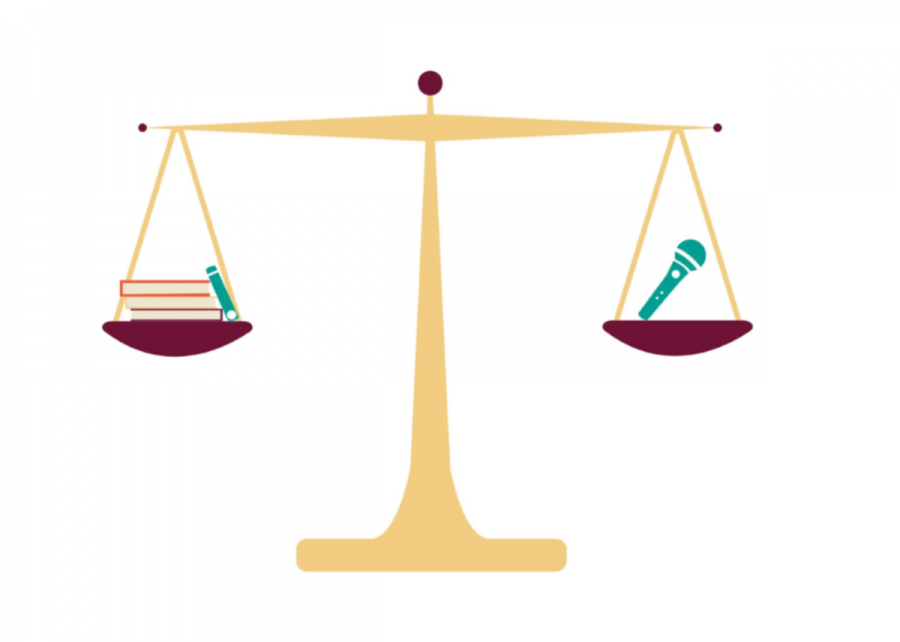
Data from another study conducted by Media Literacy Now shows that only 38% of participants were taught how to analyze media in high school. At Dreyfoos, students have the opportunity to choose between a variety of English courses depending on rigor. While these classes are meant to improve students’ literacy skills, not enough emphasis is placed upon strengthening one’s media literacy skills. As students progress through their syllabus, they are tasked with reading a variety of novels from differing time periods, but many students rarely get the chance to discuss and analyze modern news media and the messages being conveyed, as well as recreate said media.
At school, students are not taught the ethics of journalism and what constitutes professional journalism.
Fostering Media Literacy
More emphasis should be placed on modern media in schools. Students should stay educated on current news events. While content about news from various outlets — such as news influencers, news panels, and social media posts — is geared to inform audiences, it cannot replace reading and analyzing journalistic articles. This means physically picking up newspapers and magazines, flipping through the thin pages, and picking up on what is truly being said by examining what type of language is being used. When reading newspapers from certain outlets, it is important for the reader to consider the sources, the author, and the audience of the newspaper. We often proclaim that it’s important to separate the art from the artist, but the truth is, writers almost always write about their personal beliefs and experiences in their work, creating bias.
When looking at social media accounts dedicated to news, I always analyze who follows the account and comments on the posts, the tone of their voice, and how they back up their claims. All in all, language is the most important. Every word has an implicit connotation and message, and it’s imperative to note what the article is trying to sell. Different newspapers omit and focus on different facts for the same story, and this can be seen in the headline itself. It’s important to bridge the discrepancies between different sources and build your own opinions on the subject matter.
Though this can be hard to achieve, it is also important to have a clue about opposing viewpoints. If I’m solely reading news tailored towards my beliefs, it’s harder for me to see the nuances that other publications have to offer. Even if I disagree with their politics as a person, it shows me how writers can control the flow of information and how easily the media manipulates the readers.
Staying aware of what is being said in the media, decoding both implicit and explicit messages, and forming your own opinions on the information you have been fed is crucial to becoming successful and knowledgeable in the future. An article published by The University of North Carolina at Chapel Hill suggests “studying algorithms, thinking more about how you phrase a search, critically thinking about the keywords in a text, and to always learn.”
When it comes to AI-generated videos and images, schools should teach students how to recognize real footage and fake footage, and what signifies AI-generated footage. For many of us, the hyper-realistic images with six fingers on one hand, a jumbled background, the smoothed out pores, and the overall feeling are enough to indicate that it’s fake. The task becomes more difficult, however, when the images are of lower quality or when they can replicate human work. (I’m still mad that I fell for some of these.) It’s important that we can stay vigilant and continue to ask questions about what we’re seeing in the first place.
Media and news literacy are integral to our understanding of the world, and if our world is overrun by false news, AI-generated content, and echo chambers, then it begs the question of how our world will even function in the near future. English majors, for all they’ve been scrutinized for, do get the right to say, “Yes, it is that deep.”