
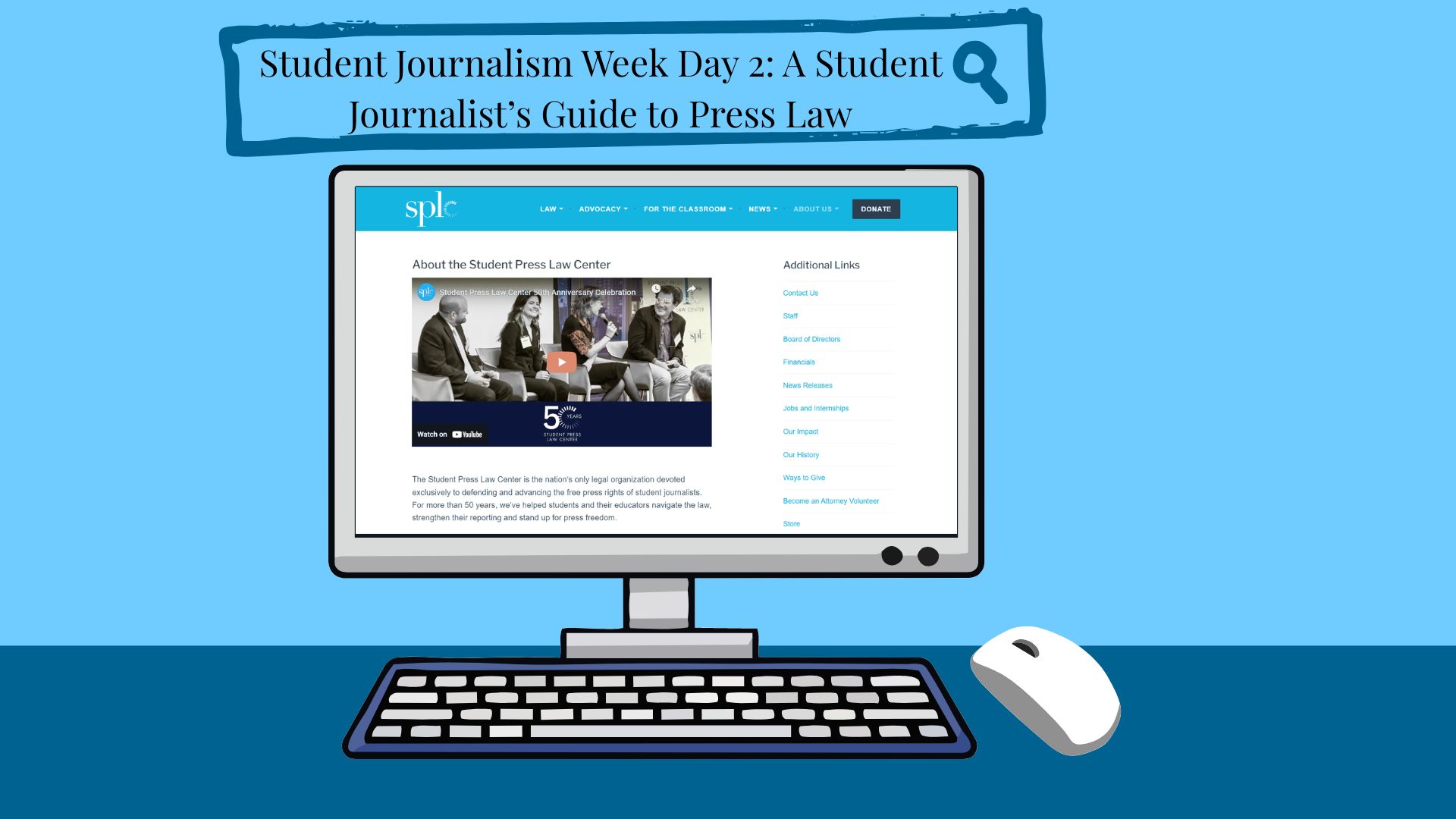


For student journalists, navigating public records, legal issues, and censorship threats can become complex blockades to reporting; however, one organization is working to change that. The Student Press Law Center is an organization founded in 1974 by the Kennedy Memorial Foundation and the Reporters Committee for Freedom, which, according to their website, has the main goal of “advancing the free press rights of student journalists.”
The SPLC is the nation’s only legal organization that works exclusively to advance the press freedoms of student journalists and their advisers. It provides several resources to aid student journalists as they navigate reporting under high-pressure environments.
Public Records Letter Generator
While writing investigative stories, one useful tool for journalists is requesting public records. These include, but are not limited to, financial contracts, legal documents, and email records that may be crucial for the research development of the piece. When fulfilled, these requests can help to expedite the reporting process by uncovering information that is not always readily publicly available. Florida, in particular, has a broad public records law in its statutes, allowing any journalist or citizen to access these documents with a specific request.
For the process of formally requesting public records from state or local governments, the SPLC created a public records letter generator that has been used over 350,000 times, as stated on their website. The site allows users to input their publication information along with the exact data they wish to receive, after which a fully crafted email with state-specific references to Freedom of Information statutes is presented.
To access this resource, visit the link: https://splc.org/lettergenerator/
Freedom of Information Lawsuit Template
Freedom of Information laws are national statutes that insist government information be available to the public. A majority of these laws state that the information must be provided within a “reasonable time frame.”
As record departments process requests, it can take weeks and even months to compile the necessary information, which sometimes elicits high labor costs onto the person making the request. If an organization wants to prevent someone from receiving information, they can delay sending the requested documents, leaving journalists in a waiting game to receive information. This withholding of information is illegal, but hard to prove, so the SPLC provides downloadable documents of formal complaints to expedite the process of pursuing legal action if FOI laws are not being followed correctly.
To access the Freedom of Information Lawsuit Template, visit the link: https://splc.org/templates/
New Voices
Under the First Amendment, journalists are granted the freedom of the press, which encourages journalists to gather, report, and publish information without censorship from the government for the greater good of the people. However, student journalists are not fully guaranteed this freedom, as a landmark court case, Hazelwood School District v. Kuhlmeier in 1988, ruled that student speech in school-sponsored publications could be censored without violating the students’ First Amendment rights to the content under certain considerations. These reasons include the work being libelous, promoting illegal actions, or disrupting school operations.
As a result, school-sponsored newspapers, yearbooks, and TV news programs do not have the full freedom to report on controversial issues without the risk of getting censored. To maneuver this, the SPLC created a student-led initiative called New Voices.
According to the SPLC website, New Voices is a bipartisan grassroots movement aiming to counteract the decision of Hazelwood v. Kuhlmeier by passing state legislation called New Voices Laws, which restrict school officials’ abilities to censor student publications. 18 states have enacted New Voices Laws, with the latest being Minnesota in early 2024. The SPLC provides a model bill for the Student Press Freedom Restoration Act along with informational flyers that explain the cause. Although Florida has not passed these laws, the SPLC continues to work with student journalists across the nation to introduce state legislation.
For more information about the New Voices movement, visit the link: https://splc.org/new-voices/
Although student journalists across the nation continue to face legal complications, censorship, and challenges while reporting, the SPLC provides resources to help them overcome barriers, as they work to “ensure students have the legal support and tools to strengthen their reporting, navigate challenges and stand up for a free press.”