
Skip to Content
The Season Should Belong to All of Us

The Season Should Belong to All of Us
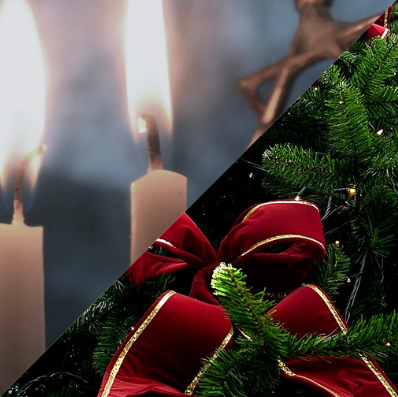
The Winter season often centralizes Christmas, limiting representation of other cultures and religions

Every year, as soon as the calendar flips to December, the world seems to burst into red and green. Christmas music floods the radio, holiday-themed events start to appear on school calendars, and conversations shift toward decorated trees, Santa, and stocking stuffers. In fact, it’s so familiar that most of us barely notice it. 

According to Nielsen, a media measurement and analytics company, more than 500 U.S. radio stations switch to an all-Christmas format each year, reinforcing a cultural atmosphere that schools tend to mirror in their own December celebrations. But familiarity doesn’t make it inclusive. And when that atmosphere filters into school life, students are the ones who feel it first. 

For many students, including me, someone who celebrates Hanukkah, the winter months celebrate more than Christmas, and for some, they celebrate something else entirely. That reality often disappears under the weight of one holiday that has become the dominant language of December in the United States, often drowning out the representation of other cultures.

According to the Pew Research Center, an independent fact-based organization that tracks national demographic patterns, with 63-64% of students in schools across the country aged 13-17 being Christian, 9 in 10 Americans celebrate Christmas. Moreover, with roughly a third being religiously unaffiliated and a smaller portion identifying with other faiths, school environments in December overwhelmingly mirror the traditions of the majority, and often not for the third who do not celebrate Christmas. Decorations, classroom activities, concerts, and “holiday” events tend to center on Christmas almost by instinct, leaving other traditions with little to no visible presence. 

For students who don’t celebrate Christmas, that absence shapes whether they feel recognized in the place where they spend most of their day. When only one tradition fills the hallways, students with different backgrounds can feel as though their own celebrations exist outside the school community entirely. In school communities that span a number of beliefs and backgrounds, December should reflect more than a single holiday.

Even when schools try to be neutral, they almost always end up mirroring Christmas traditions anyway. Decorations are winter-themed but still pull from Christmas colors. Class parties are renamed “winter celebrations” but still feature candy canes, Santa-shaped cookies, and Secret Santa exchanges. 

According to Education Week, a source of national reporting on K–12 education, while groups encourage teachers to diversify winter lessons, that guidance is far more common in early grades than in middle and high school, where holidays are rarely discussed at all, except through the visuals and traditions that continue to center on Christmas. 

Though we have tried to appear more inclusive by highlighting other holidays, through DSOA Today, the school’s morning announcements. Whether it be the segment on Diwali or the discussions of Women’s History Month, seeing a holiday acknowledged, even briefly, can feel validating and refreshing for students. 

While Christmas is meaningful for many students and families, the issue begins when a single holiday becomes the default lens through which the entire school community views the season. When one tradition is the only one with a spotlight, students who celebrate differently end up shrinking themselves to fit the tone around them. 

When students stop mentioning their own holidays altogether, when they sit through Christmas crafts, Christmas music, and Christmas-themed activities without saying a word, it’s because they’ve learned their celebrations won’t be part of the conversation anyway. I noticed how easy it is to fall into that pattern too, setting aside the parts of my life that don’t match the part of December unfolding around me. 

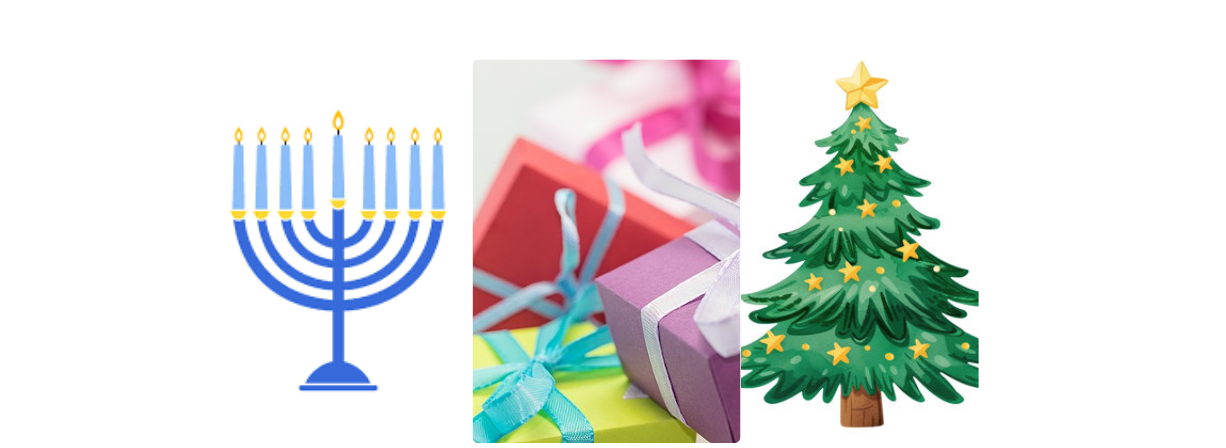
Although Christmas is centered during the winter holidays, celebrations such as Hanukkah, which is celebrated by millions of Jewish people around the world, remain significant. For many, the candles on the menorah still hold meaning, even in a world full of Christmas trees.

Students spend almost seven hours a day inside school buildings, where what they see and hear becomes part of what they understand as normal. When school culture consistently prioritizes one holiday above all others, it actively reinforces social imbalance. While Christmas songs play over classroom speakers throughout the month, Hanukkah songs don’t make the cut, and most students have never heard a Kwanzaa melody played anywhere outside a cultural presentation, if their school even offers one. 

The Prism holiday performance, which features the music department, is a prime example of the Christmas-centered ideology. The performance features 31 pieces, with only four being Hanukkah songs and no Kwanzaa songs included. While the performance is impressive and clearly the product of immense talent and preparation, its structure directly mirrors a broader pattern seen across schools in the wintertime. 

That imbalance shows up most clearly in classrooms. According to Pew Research Center’s national survey of U.S. teens, less than half of American students identify as Christian, yet the school environment in December often assumes that everyone does. Additionally, 53% of public school students say they regularly see Christian symbols and practices at school. 

I’ve noticed how our school culture unintentionally reinforces the idea that December belongs to Christmas alone. I remember sitting in class during a holiday craft, where everybody decorated stockings. I made mine because it was the assignment, but it felt strange doing it to blend in. Nobody meant any harm, but in that moment, it was clear the activity was not built with students like me in mind. 

And I know many others have felt the same pressure to go along with traditions that aren’t theirs. Hanukkah, which holds deep significance for many families, remains virtually absent from the shared school environment. Its absence is not due to hostility, but rather out of habit. If the holiday season is truly a communal celebration, it should create space for every tradition that shapes the community. 

Adding more diversity to how winter is presented in schools would make a meaningful difference for students who rarely see their traditions acknowledged. Something as simple as acknowledging multiple holidays helps validate students’ identities and reduces the feeling of being an outsider in their own classrooms, whether that means including Hanukkah or Kwanzaa in announcements, adding books or lessons that highlight different winter traditions, or incorporating symbols and decorations other than green and red. 

When students see their backgrounds reflected in the spaces they learn in, they’re more willing to participate, speak up, and share their experiences. Representation also enables students to show up as their full selves rather than editing pieces of their identity to match the dominant culture. 

This shift also benefits students who do celebrate Christmas. Understanding other cultures deepens empathy and broadens students’ worldviews. When you grow up seeing only your own traditions, your understanding of community remains narrow. On the other hand, when you grow up seeing diverse celebrations, you build a more complete picture of the world around you.

There are simple, realistic ways to do this. Schools can diversify winter concerts so the music reflects multiple traditions. Additionally, the morning announcements can broadcast information about Hanukkah, Kwanzaa, and other holidays. Administration can allow different cultural clubs to decorate parts of campus with elements from their traditions. Teachers can plan crafts that highlight a range of symbols instead of just Christmas trees. 

Schools often talk about inclusion, representation, and belonging. December is the perfect time to prove those values matter. Winter doesn’t belong to one holiday, one culture, or one narrative. It belongs to every student walking through hallways. If our holiday traditions don’t reflect the diversity sitting in our classrooms, then we are celebrating the season at the expense of the very inclusivity we claim to value.

Although Christmas is centered during the winter holidays, celebrations such as Hanukkah, which is celebrated by millions of Jewish people around the world, remain significant. For many, the candles on the menorah still hold meaning, even in a world full of Christmas trees. (Courtesy of Wikimedia Commons)
Donate to THE MUSE
$0
$5000
Contributed
Our Goal

Your donation will support the student journalists of Dreyfoos School of the Arts. Your contribution will allow us to purchase equipment and cover our annual website hosting costs.

Donate to THE MUSE
$0
$5000
Contributed
Our Goal