

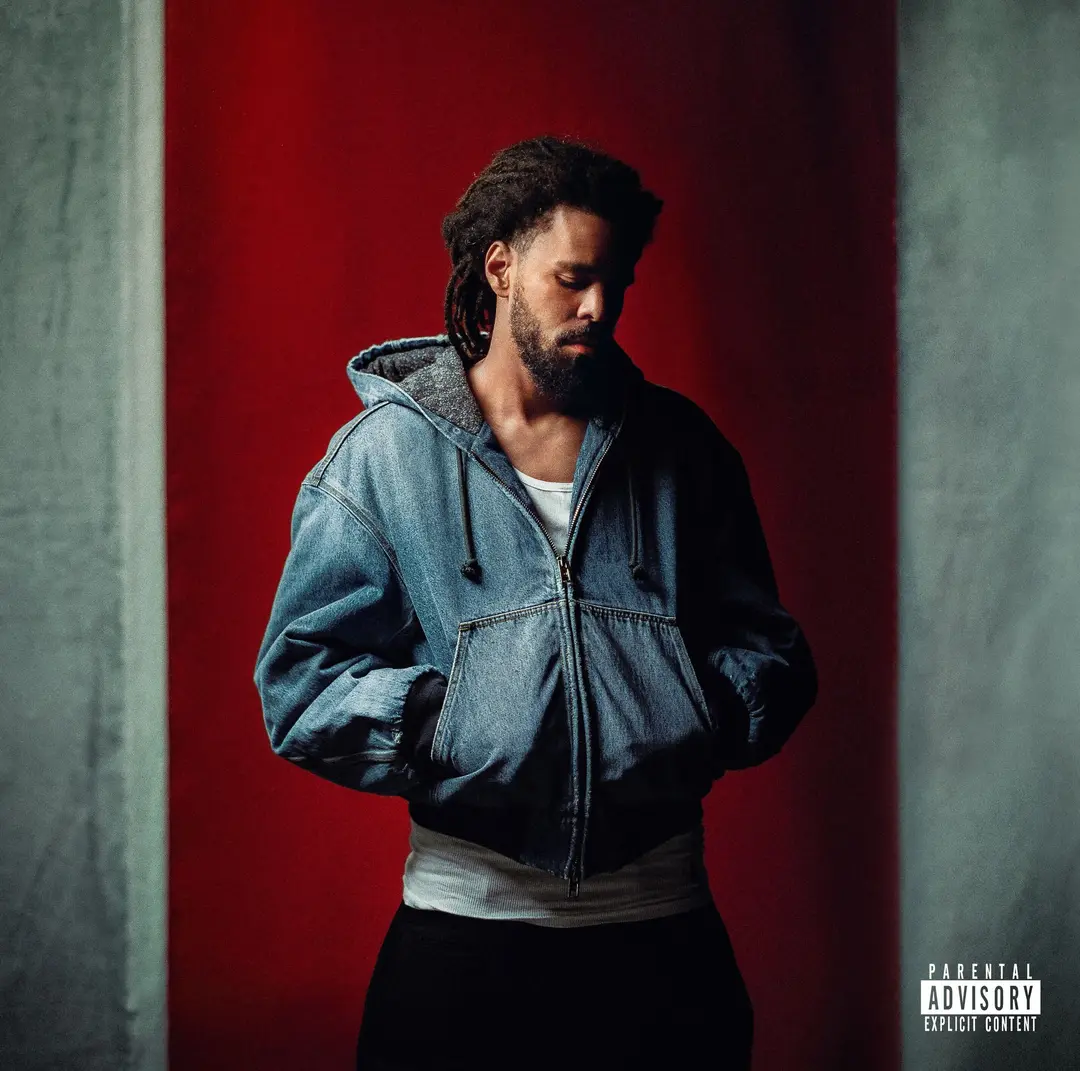
Much to the dismay of J. Cole loyalists like myself, his career seems to be at its tail end, with him strongly suggesting this to be the final chapter in his rap career. However, even with no official decree stating this would be Cole’s definitive last album, an intuitive deep dive would cause any listener to realize it is so. It always has been since the first mention of “The Fall Off” in the closing track of Cole’s fourth studio album, KOD, featuring “1985 (the intro to ‘The Fall Off’)” as the final song.
Each addition of Cole’s discography feels methodical, contributing to an ever-growing story of the trials and tribulations needed to rein in his fame and keep it in check. His first mixtape, “The Come Up,” serves as his ultimatum to the rap industry, announcing his thirst for fame. His second mixtape, “The Warm Up,” shows his battle for it, and his third, “Friday Night Lights,” showcases how the ambition and might to achieve fame begin to pay off.
His first studio album, “Cole World: The Sideline Story,” tells of his battles with matching authenticity and fame. His next studio album, “Born Sinner,” shows what sprouts from it — addiction, ego and malice — while 2014 “Forest Hills Drive” shows him going back to his roots in Fayetteville, freeing himself from the binds of fame.
It was interesting to see how he carried this recognition of his roots to his most recent album, sampling “Carolina in My Mind” by singer-songwriter James Taylor, another gentle nod to his hometown in North Carolina. The reference underscores the place that served as his artistic catalyst, shaping Cole’s upbringing and nearly two-decade-long rap career.
At the peak of his career, Cole has earned himself a seat in conversations about the all-time greats in hip-hop and rap, a notion that is explored further in his fifth studio album, “The Off-Season.”
However, his career began an inevitable decline, as the album’s name suggests. While many factors contributed to his downfall, the most major one being his prioritization of meaning over momentum with releases such as “KOD” and “4 Your Eyez Only,” his lack of reinvention and adamance to stick to his roots, and, of course, as for most hip-hop artists, Drake, also played a role.
During the Kendrick Lamar and Drake beef in 2024, Cole was pulled into the moment and pressured to side with either artist. He chose to step back, stunting his career.
“The Fall Off” is Cole’s step back into the industry. The album does not attempt to tackle any major social issue or contribute to the ongoing narrative of Cole’s discography; it serves as a coda, reflecting on his career as a whole, his humble upbringing, and his hopes for the future. Tracks such as “Two Six” reflect on Cole’s adolescence and young adulthood, touching on class anxiety, limited opportunity, and the quiet pressure to escape one’s environment, while the track “SAFETY” challenges the instability of his upbringing, clashing it with his artistic discipline.
Overall, “The Fall Off” feels very dense. In one hour and 54 minutes, it seems to condense Cole’s entire career and life into 24 tracks, each one vital to the overall narrative. Although a brief look at the album reveals its inherent lack of major features, with the most notable coming from Future on “Run a Train” and “Bunce Road Blues,” which focus more on vocals than full verses, this could seem like a problem, especially for an album attempting to reintroduce a “fallen off” Cole. However, with only Disc 29 and Disc 39 of “The Fall Off” being released to streaming, there is still hope for the return of frequent Cole collaborators, including American rappers JID and Bas. I do not believe his features to pose much of an issue though, as Cole traditionally is not reliant on them and is instead mostly carried by his personal lyricism and flow.
“The Fall Off” opened with 35 million streams in its first days, positioning itself as the second-largest hip-hop debut of 2026 behind A$AP Rocky’s “Don’t Be Dumb.” These metrics are well deserved. Cole has become a pillar of modern rap, something that I believe has been overlooked since the release of his previous studio album, “Might Delete Later,” which felt disposable and unfiltered, as its name reflects. The opposite is true for “The Fall Off,” which feels compact and highly directed, employing a pin-straight cinematic framing that takes listeners through an odyssey of Cole’s life, from his humble beginnings in Fayetteville to the largest stadiums in America.
I strongly believe this to be a standout in Cole’s catalogue, a beacon of hope for his fellow peers, showing that conformity is not key to success. “The Fall Off” is the most Cole-centric album he has released, leaning deeply into his acquired style. It is something many of his contemporaries have not been doing, instead stripping their sonic language and lyricism for what is deemed “popular in the moment.” In a world where grunge rap from artists such as Yeat, Playboi Carti and EsDeeKid has taken over the Billboard charts, Cole shows that a little heart and loyalty can far surpass compliance.
“My life, I see it in reverse,” Cole said on his song “The Fall-Off is Inevitable.”
Considering the album’s overall diversity and commitment to Cole’s heritage and upbringing, I believe “The Fall Off” to be a vital and essential to his discography; therefore, I rate it a 4.5 out of five stars.