


Putting the Fear Back in Frankenstein

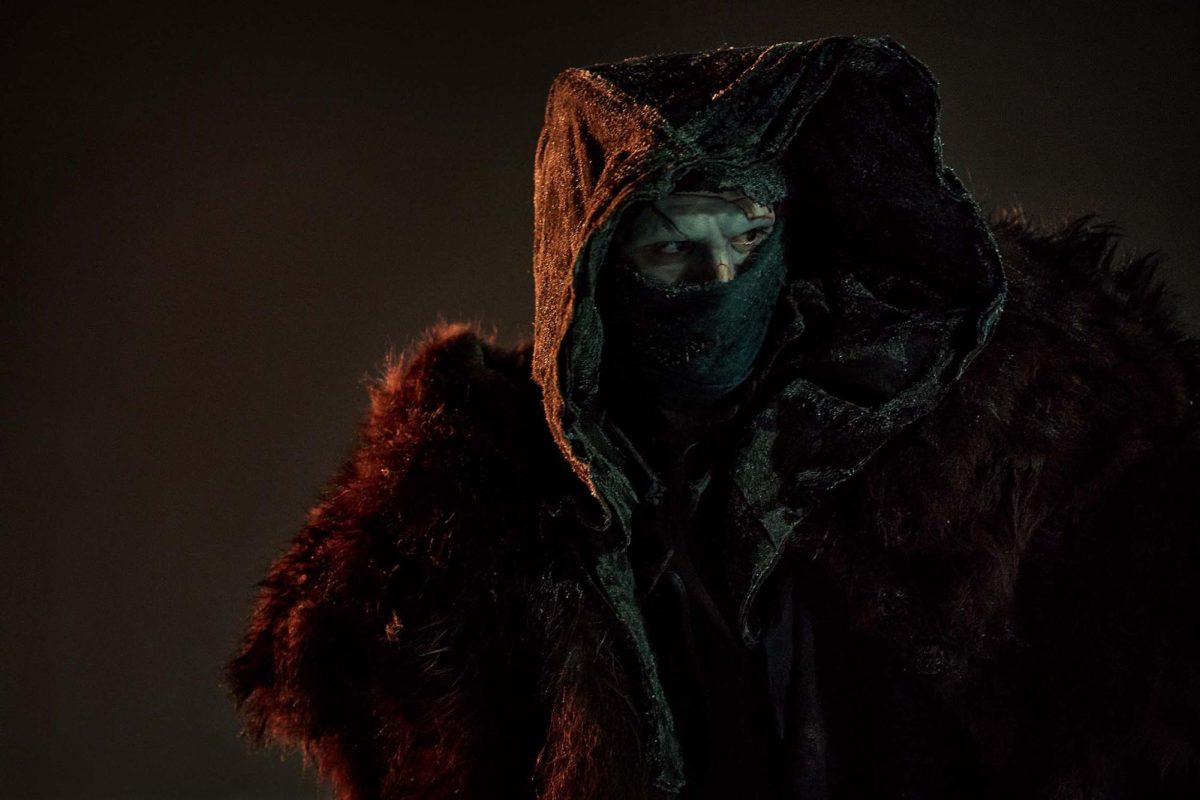
The first scene did what a first scene should do: draw the audience in. You could hear every emotion in the actors’ voices, every unanswered question, and every fear. The Creature’s introduction was thrilling and suspenseful. I was delighted when the hatred emanating from him felt palpable, and how much of it was directed towards Victor, emboldened by Elordi’s charged voice acting. I almost wished I could wipe the memory of the novel out of my head just so I could ask myself, “What manner of Creature is that? What does he want from Victor?” as did the characters in the movie. For people unfamiliar with the story of “Frankenstein,” I genuinely envy you.
Victor’s attachment to his mother was emphasized more initially in the film than in the original literature, laying a stronger foundation for the events that followed. After Claire’s death in childbirth, it seemed as though the moment was a catalyst for Victor to grow attached to the idea of conquering death and creating life of his own. His determination to prove his father, a man of science and academia himself, wrong parallels his relationship with the creature later in the film. As his character develops, the audience sees that he is in the wrong — but not Victor. He’s convinced he’s better than God, and as Elizabeth put it, “Like every tyrant, he delights in playing the victim.”
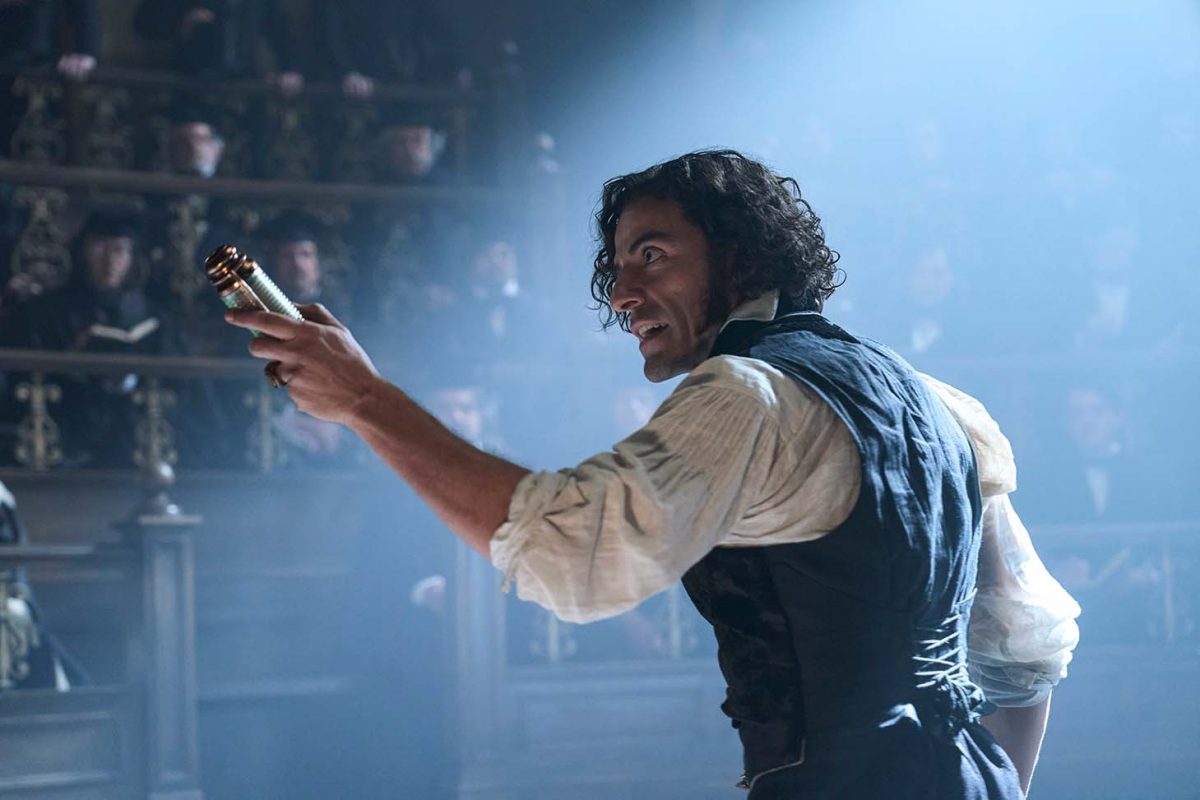
Isaac’s delivery around 20 minutes into the movie of his rant about the nature of life and death was brilliant in every single word. Packed with Guillermo del Toro’s typical religious symbolism, the camerawork around Victor and his body language was incredibly well done. It also speaks to me. I, too, would go on an insane rant if I were a stressed-out student studying at an English medical university. That actually might be more terrifying than anything else in the movie.
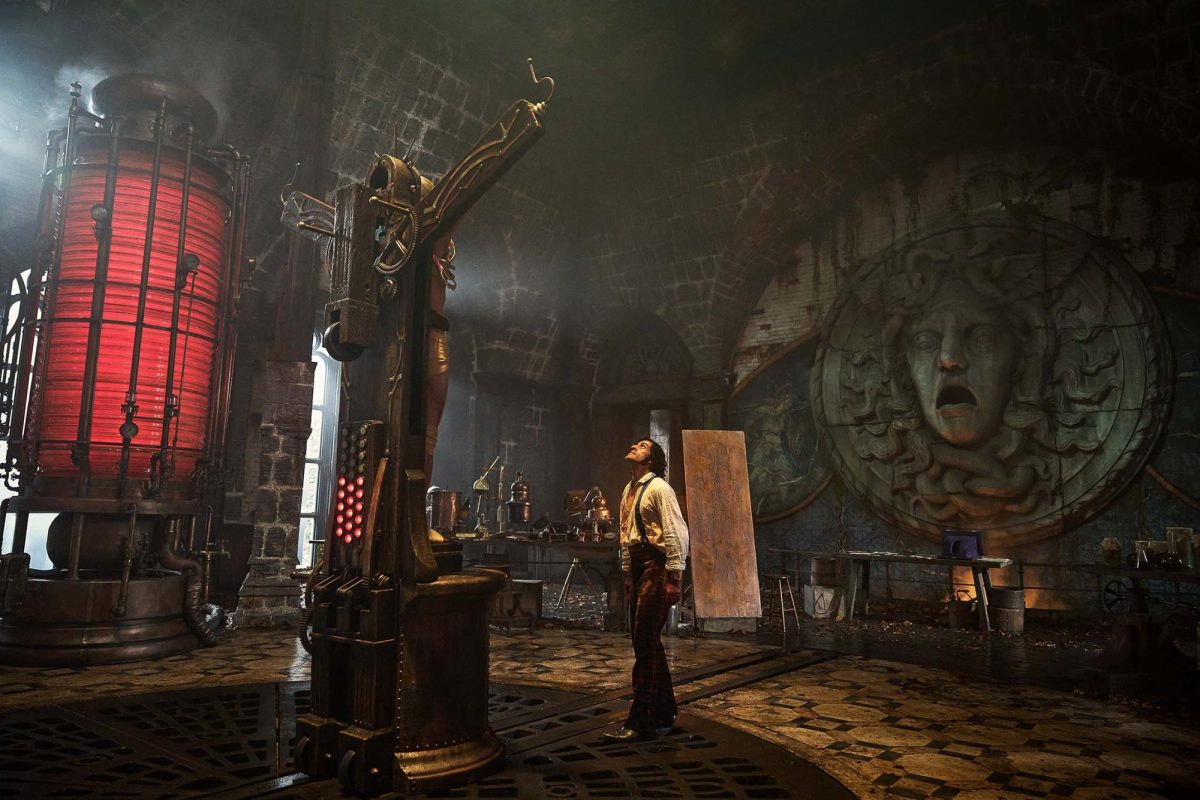
I found myself shedding a tear of joy watching the movie’s presentation of characters and motivations unfold. The characters were fully developed, consistent, and accurate. Victor is proud and bashful, driven by the desire to prove to others that he is right about everything (I could reach this state of delusion on an essay I procrastinated on for far too long.) This, in turn, gives him more agency over the creature. His creation was not a freak accident. Surrounded by pouring rain, loud thunder, and crude models of the lymphatic and skeletal systems, Victor created a monster who essentially behaves as a newborn (I couldn’t believe that someone at Elordi’s massive height could exhibit the traits of an infant so well), and he turned away out of shame and disgust. In fact, there’s a moment early on in the film where Victor wore bright, red gloves, almost as though he had blood on his hands. “Only monsters play God, Baron,” Elizabeth said to Victor in the film. Once the film shifts from Victor’s tale to the Creature’s, after the cathartic burning of the laboratory, you begin to understand what she meant.
Clip of Victor Frankenstein and the creation of his monster
That’s why the film gets it right: it humanizes the monster and forces the viewer to reckon with his pain. There are several scenes of the Creature extending his kindness to humans and expecting nothing back. All I could do while watching was repeatedly cry, “My baby,” towards this grown man and hold back tears. del Toro illustrates that the monster had no say in his conception, nor did he have any say in how the world, including his own father-figure, mistreats him. It becomes more heartbreaking when the use of dramatic irony is employed, where you know that initially, Victor did hold love for the Creature. It felt like a betrayal once you see how much he berated the Creature and how he grew to fear his creator. Even Victor himself admitted that he had no idea what he would’ve done after creation.
The horror behind Guillermo del Toro’s “Frankenstein” is not created by cheap gore effects and flashy jump scares. The true horror lies in the themes of being unwanted by your own creator, of alienation, and exclusion from normal society. It serves as a dark reflection of humanity that the original novel did. Anyone who relates to a lack of belonging can relate to del Toro’s depiction of the Creature, from bullied students to children living in a dysfunctional household, which makes his grotesque nature more beautiful than anything. He tried to navigate an unloving world, and he remained kind and curious through it all. Although he was crueler in the novel, the changes felt more heartbreaking. You could be anything in the world and still be pushed out of society if they deem you strange in any way. The Creature himself contemplated this message: “A hunter does not hate the wolf. A wolf does not hate the sheep. But violence felt inevitable between them.”
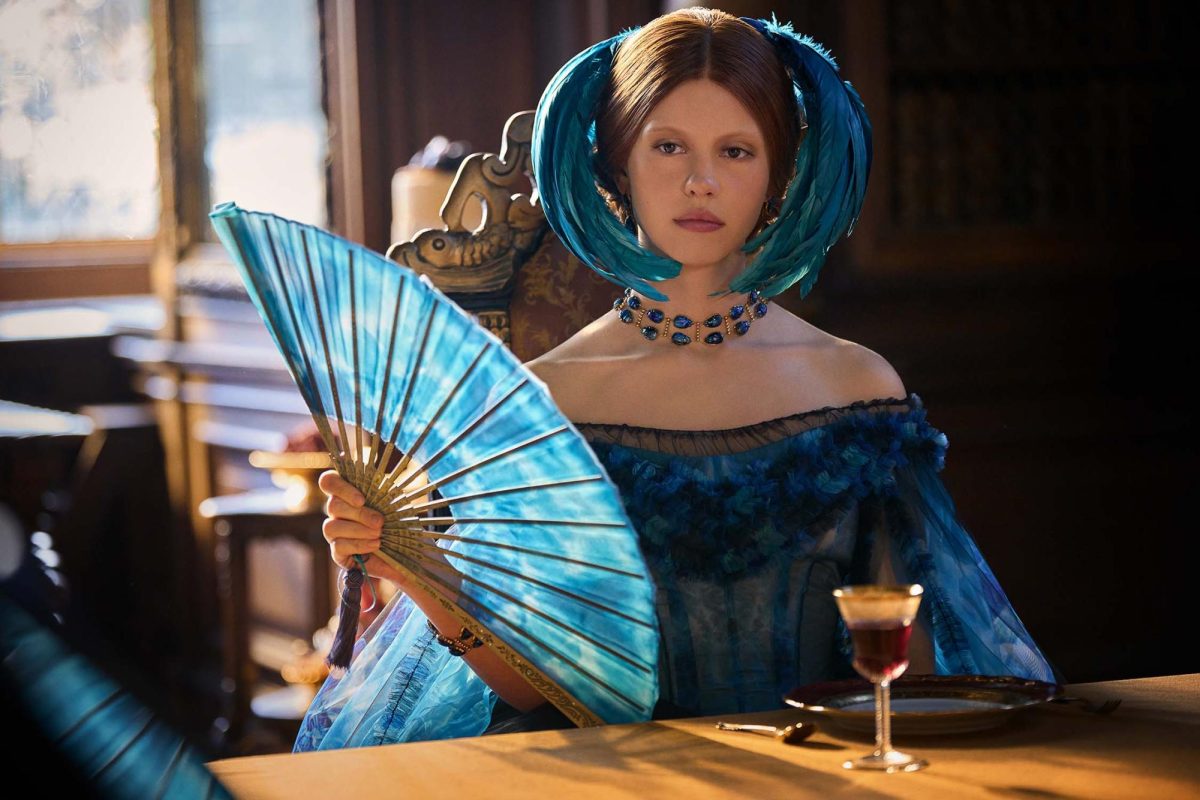
Women in the gothic genre typically haven’t been given the privilege of being their own fleshed-out characters, and Elizabeth in the novel was no exception to this. However, in the film, it’s like she’s an entirely different woman, in a good way. Goth’s casting was enough to sell me on the whole film, and her acting proved my hopes right. Her portrayal of Elizabeth was heartbreaking.
Elizabeth represents the audience, our perspective as consumers of classic literature and the film. Despite her quiet nature and her endearing love for bugs and the Creature, Goth delivered very poignant lines. “What is pain,” Elizabeth said to Victor, “if not evidence of intelligence?” Elizabeth was the one to call out Victor’s nonsense (and thank God she did, because it seemed like no one else would). Elizabeth felt something for the Creature, and Victor could not stand this. It infuriated him more than anything in the world. Here was a woman who did not love him back. Here was a woman he could not possess. Here was a woman who saw beauty in his creation when he was appalled.
Elizabeth’s romance with the Creature, although it was never in the novel, came to me as no surprise. For one, it was implied in the trailers, which makes me happy because I now know that good trailers — ones with the perfect amount of information — still exist. It is also a common trope in Gothic fiction, but unlike most depictions, Elizabeth chooses to love and care for the Creature, who reciprocates her feelings. She’s not forced into anything. She’s not a damsel in distress. del Toro gives her more agency, not just from her novel counterpart, where she’s stuck in the role as Victor’s wife, but also in the movie as a Gothic heroine. So much care is put into her entire character. Her costume design is utterly breathtaking, with her elaborate gowns and headpieces being the best of the entire cast.
The ending sealed the deal. Surrounded by icy plains, the Creature feeds warmth back into the movie by forgiving his creator. He will not continue a cycle of hatred that humans perpetuate. He is better than that. It’s a message that transforms the movie: one of revenge and power to one of forgiveness and redemption. “Frankenstein,” to me, represents the best and the worst of humanity. We alienate others whom we think are different from us, but we also choose to forgive those who wrong us. We don’t have a choice in our birth or how other people perceive us, but we have a choice to move forward rather than linger on that hatred. Victor apologizes to his son, and the Creature forgives his father. By doing so, del Toro creates a powerful story.
Overall, the movie was stunning. The pacing for such a film was done correctly. del Toro knew when to linger on a scene and when to push the audience along. The development of the film focused on the characters and their actions, though the final act noticeably decides to speed things up by including more action sequences and emotion-packed fights. The same is achieved when scenes are slowed down, representing time slowing down in the characters’ perspectives. An enthralling soundtrack played throughout the movie. For all the music fans out there, I think it’s totally worth it to purchase the soundtrack.
The cinematography enhanced the storytelling. The shots were gorgeously Gothic, following the signature del Toro style. It had his traditional amber lighting with green accents associated with “Frankenstein.” I loved the shot, early into the movie, where Victor saw an angel surrounded by fire. It was enough for me to sit up and pay attention. In the middle of the movie, there’s a beautiful scene of the creature and Elizabeth walking down the staircase, where time slows down and petals fall from the air. The chilling Edinburgh setting felt like it came straight from the vivid imagery woven within the novel. The narration and film structure were another strikingly similar characteristic between the film and the book, with a point-of-view shift in the middle of the movie.
Unlike many adaptations of “Frankenstein,” which ironically felt like a Frankenstein-esque hodge-podge version of Shelley’s novel, picking and choosing which parts needed to be kept and which parts needed to be removed and reworked, del Toro’s film maintained core themes of Shelley’s novel and added his own fresh twist to it. Even though the Academy has hardly given much thought to the horror genre, “Frankenstein” deserves its flowers. For students, the novel may seem like a bore, but the movie, while it isn’t a retelling, is enough to spark a flame of interest and intrigue.
Your donation will support the student journalists of Dreyfoos School of the Arts. Your contribution will allow us to purchase equipment and cover our annual website hosting costs.